


Cast Stretch Film vs Blown Stretch Film: Which Is Better for Pallet Wrapping?
Release time: 2026-09-17
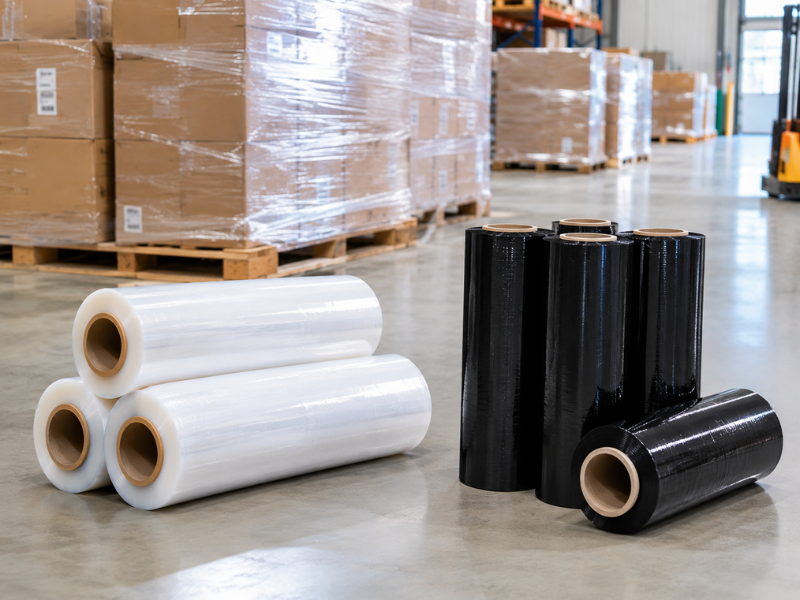
When it comes to pallet wrapping, stretch film may look like a simple packaging material. But choosing the wrong type can lead to torn film, unstable loads, extra material consumption, and higher packaging costs.
For most buyers, the choice usually comes down to two options: cast stretch film and blown stretch film. So, which one is better for pallet wrapping?
The short answer is: it depends on your load, wrapping method, and shipping conditions.
What Is Cast Stretch Film?
Cast stretch film is produced by extruding plastic resin onto chilled rollers. This manufacturing process creates a smooth and relatively clear film with consistent thickness.
One of its biggest advantages is its quiet and smooth unwind. It is also highly transparent, making it easier to see cartons, labels, and barcodes after wrapping.
Cast stretch film is commonly used for:
1. Standard pallet loads
2. Warehouses and distribution centers
3. Automated or semi-automatic wrapping
4. Uniform cartons and boxed products
5. High-volume packaging operations
For buyers handling large quantities of regular pallet loads, cast film can be a practical option because it offers consistent performance and efficient application.
What Is Blown Stretch Film?
Blown stretch film is manufactured by extruding resin into a bubble and cooling it with air. The different production process gives the film a tougher structure.
Its main advantage is puncture and tear resistance. This makes blown stretch film useful when pallets contain sharp corners, irregular products, or heavy materials that may put more stress on the film.
Typical applications include:
1. Heavy pallet loads
2. Irregular or unstable products
3. Construction materials
4. Industrial products
5. Long-distance transportation
6. Loads with sharp edges
The trade-off is that blown film is usually less clear and noisier during application than cast film.
Cast vs Blown Stretch Film: Quick Comparison
| Feature | Cast Stretch Film | Blown Stretch Film |
|---|---|---|
| Clarity | Excellent | Moderate |
| Unwind noise | Quiet | Louder |
| Puncture resistance | Good | Excellent |
| Load holding | Good | Strong |
| Best for | Standard loads | Heavy/irregular loads |
| Machine wrapping | Very suitable | Application-dependent |
| Cost | Generally lower | Generally higher |
Which Stretch Film Should You Choose?
If you mainly wrap standard cartons and uniform pallets, cast stretch film is often a good starting point. Its clarity, smooth application, and consistent performance make it suitable for busy warehouses and high-volume packaging.
If your pallets are heavy, irregular, or have sharp edges, blown stretch film may be more suitable because of its higher puncture resistance and load-holding capability.
However, don’t choose based only on the price per roll. A cheaper film that tears frequently can actually cost more because of additional wrapping time, film waste, and damaged loads.
For B2B buyers, it is better to compare cost per pallet, not simply cost per roll.
Final Thoughts
There is no universal winner between cast and blown stretch film. The right choice depends on the products you are wrapping and the conditions they will face during storage and transportation.
If you are looking for more packaging solutions, you can also explore the Hylin Tape product range for industrial and packaging applications.
For additional packaging and logistics information, the Institute of Packaging Professionals (IoPP) is another useful industry resource.
Before placing a large order, it is a good idea to test the film with your actual pallet loads. A small trial can help you compare film consumption, load stability, wrapping speed, and overall cost per pallet.

