A Guide to Choosing Tape for Plastic, Metal, Glass and Wood Surfaces
Release time: 2026-10-06
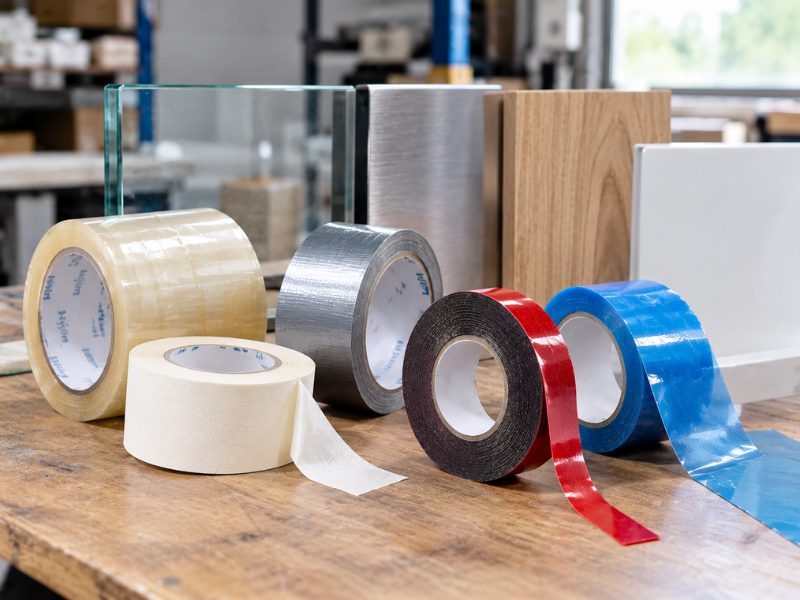
Choosing adhesive tape sounds easy—until you need it to stick reliably to a specific material. Plastic, metal, glass, and wood all have different surface characteristics, so using the same tape for every application can lead to weak adhesion, edge lifting, or residue.
For distributors, wholesalers, and industrial buyers, the better approach is to choose the tape based on the surface, application, and working environment.
1. Tape for Plastic Surfaces
Plastic is one of the trickier materials for adhesive tape. Some plastics, especially PE and PP, have low surface energy, making it difficult for standard adhesives to form a strong bond.
For smooth and rigid plastics, acrylic-based double sided tape can be a good option. For difficult plastics, it is better to look for tapes specifically designed for low-surface-energy materials.
Before applying tape to plastic, always check whether the surface contains oil, mold-release agents, or other contaminants. A small adhesion test is also a good idea, especially for large production orders.
2. Tape for Metal Surfaces
Metal is generally an easy surface for adhesive tapes—as long as it is clean.
Oil, grease, dust, oxidation, or workshop contamination can seriously reduce adhesion. For clean metal surfaces, double sided tape, duct tape, aluminum foil tape, and other industrial tapes can all be suitable depending on the application.
For outdoor or high-temperature applications, don’t focus only on initial stickiness. Temperature changes, moisture, UV exposure, and long-term aging should also be considered.
3. Tape for Glass Surfaces
Glass is smooth and usually provides a good bonding surface. Acrylic adhesive tapes are commonly used when strong and long-lasting adhesion is required.
For temporary applications such as painting, decorating, or marking, masking tape is often more practical. If the tape will be exposed to sunlight or needs to stay in place for a long time, UV and temperature resistance become more important.
The biggest mistake with glass is often choosing a tape that sticks too aggressively when clean removal is required.
4. Tape for Wood Surfaces
Wood can be more challenging because it may be rough, porous, dusty, or coated.
Smooth, painted, or sealed wood is generally easier to bond than untreated timber. For rough surfaces, a thicker or more conformable tape may provide better contact.
Real-world applications can be quite different from laboratory tests. This Engineering Stack Exchange discussion about bonding plastic to glass is a useful example of how surface cleanliness, material type, and removability can affect adhesive selection.
For porous wood, surface sealing may also improve consistency. Always test first if the appearance of the wood or finish is important.
5. Surface Preparation Matters
Even a high-quality tape can fail when the surface is dirty.
Before applying tape, make sure the surface is clean, dry, and free from dust, oil, and grease. Apply firm pressure after installation so the adhesive can make good contact with the substrate.
For difficult plastics, painted surfaces, or porous materials, additional preparation may sometimes be required. Surface preparation is especially important for industrial applications where consistent bonding is required across large production volumes.
Choose the Tape Based on the Application
There is no single tape that is perfect for plastic, metal, glass, and wood.
The right choice depends on the substrate, required holding strength, temperature, moisture, exposure time, and whether the application is temporary or permanent.
If you’re sourcing adhesive tape for different materials, you can explore the adhesive tape solutions from Hylin Tape and compare options based on your application.
For B2B buyers, testing samples before placing a large order is always a smart step. A few simple tests can help prevent much bigger problems after production or shipment.