


Waterproof Repair Tape vs Silicone Sealant: Which Is Better?
Release time: 2026-10-08
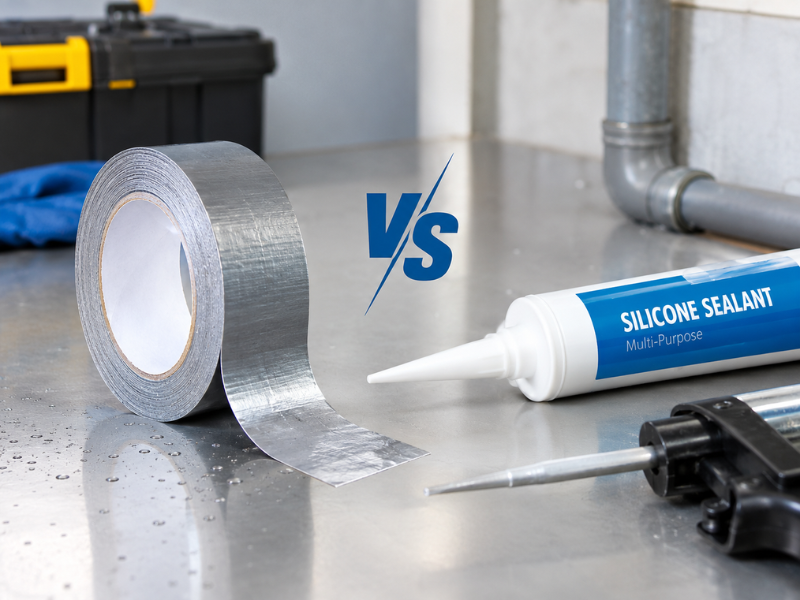
When you need to stop a leak or seal a damaged surface, two common options usually come to mind: waterproof repair tape and silicone sealant.
Both can help keep water out, but they work in very different ways. One is a ready-to-use adhesive tape that can often be applied in minutes, while the other is a liquid sealant that needs time to cure.
So, which one is better?
The short answer is: it depends on the repair. Understanding the difference can help you choose the right solution and avoid having to repair the same leak twice.
What Is Waterproof Repair Tape?
Waterproof repair tape is an adhesive tape designed to create a water-resistant or waterproof barrier over a surface. Depending on the product construction, it may use a waterproof backing combined with a strong pressure-sensitive adhesive.
It is commonly used for:
1. Pipe and hose repairs
2. Roof and gutter maintenance
3. Outdoor equipment
4. Plastic and metal surfaces
5. Temporary leak repairs
6. Sealing joints and cracks
7.General maintenance work
One of its biggest advantages is convenience. There is no mixing, curing or special equipment required. In many cases, you simply clean the surface, cut the tape to size and press it firmly into place.
For businesses that need a practical maintenance product, waterproof repair tape can also be easier to store, transport and use than liquid sealants.
What Is Silicone Sealant?
Silicone sealant is a liquid or paste-like material that is applied to a joint, gap or surface and then cures into a flexible rubber-like seal.
It is widely used around:
1. Windows and doors
2. Bathrooms and kitchens
3. Glass and ceramic
4. Plumbing fixtures
5. Construction joints
6. Expansion gaps
7. Building maintenance
The main advantage of silicone is its ability to fill gaps and irregular spaces. Unlike tape, it does not need a flat surface to form a continuous seal.
Silicone also remains flexible after curing, which makes it useful where two surfaces may move slightly over time.
Waterproof Repair Tape vs Silicone Sealant: Key Differences
The biggest difference is how they create the seal.
Waterproof repair tape covers the damaged area with a physical adhesive layer. Silicone sealant fills the gap and cures in place.
Here is a simple comparison:
| Feature | Waterproof Repair Tape | Silicone Sealant |
|---|---|---|
| Application | Very easy | Requires more preparation |
| Drying time | Usually immediate | Requires curing time |
| Gap filling | Limited | Excellent |
| Flat surfaces | Excellent | Good |
| Irregular surfaces | Depends on flexibility | Excellent |
| Clean application | Usually cleaner | Can be messy |
| Quick emergency repair | Excellent | Less convenient |
| Long joints/gaps | Good for suitable applications | Excellent |
| Removal | Can often be peeled off | Usually requires scraping |
The right choice depends less on which product is “stronger” and more on what you are trying to repair.
When Should You Choose Waterproof Repair Tape?
Waterproof repair tape is usually the better choice when speed and simplicity matter.
For example, imagine a small leak in an outdoor pipe or a damaged plastic container. If the surface is relatively smooth and clean, tape can provide a quick repair without waiting for a sealant to cure.
It is also useful when the repair needs to be made outdoors or in a situation where you do not have access to many tools.
Another advantage is that tape can reinforce a damaged area while sealing it. This makes it useful for certain maintenance and temporary repair applications.
For manufacturers, distributors and maintenance suppliers, waterproof repair tape can also be an attractive product because customers can use it without much technical knowledge.
When Is Silicone Sealant a Better Choice?
Silicone sealant makes more sense when you need to fill a gap rather than simply cover a damaged area.
For example, if there is a large joint between two surfaces, a narrow crack around a window frame or an uneven connection between materials, silicone can spread into the gap and create a continuous seal.
It is particularly useful when the surface is irregular or when some movement is expected.
However, silicone requires more preparation. The surface normally needs to be clean and dry, and the sealant needs enough time to cure before being exposed to water or mechanical stress.
Can You Use Both?
Yes. In some repair and waterproofing applications, tape and sealant can actually complement each other.
For example, a sealant may be used to fill a joint while waterproof repair tape provides additional surface protection around the repaired area.
The important point is to check whether the two materials are compatible with each other and with the surface being repaired. Adhesion can vary significantly between plastic, metal, rubber, painted surfaces and other substrates.
Discussions among DIY and outdoor-gear users also show that the material being repaired matters a lot when choosing between sealing tape and liquid sealants. Different coatings can require different adhesive or sealant systems.
Which One Should You Choose?
If you need a fast, clean and easy repair, waterproof repair tape is often the more convenient option.
If you need to fill a large gap, seal an irregular joint or create a flexible permanent seal, silicone sealant may be more appropriate.
For buyers and distributors, the best approach is not to think of these products as direct replacements for each other. They solve slightly different problems.
Before choosing a waterproof repair product, consider the surface material, size of the damaged area, exposure to water, temperature, movement and expected service life.
For businesses looking for adhesive tape solutions for maintenance, packaging and industrial applications, you can also explore the tape products available from Hylinn Tape.
The bottom line? Waterproof repair tape wins for speed and convenience, while silicone sealant wins when gap filling and flexibility are the priority. Choosing according to the actual repair condition will usually give you a better and longer-lasting result.

