General Purpose vs Professional Masking Tape: What’s the Difference?
Release time: 2026-09-24
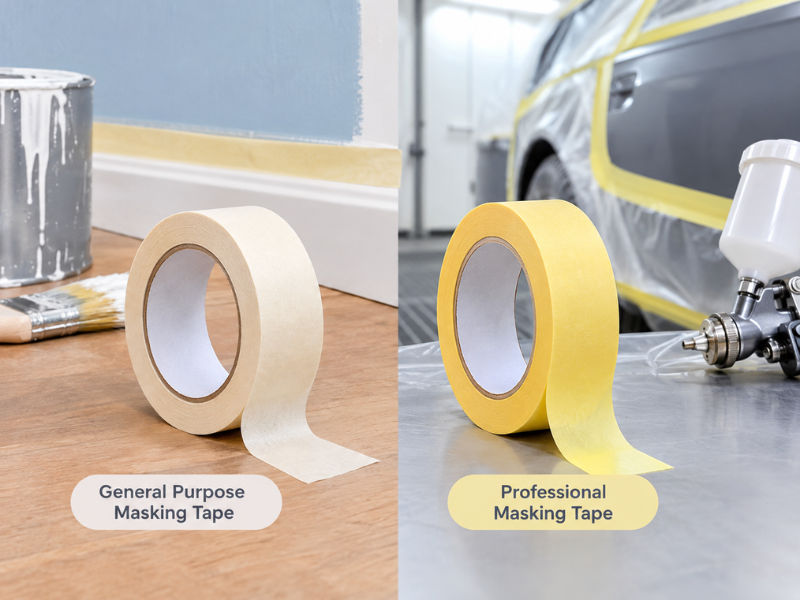
Not all masking tapes are made for the same job. At first glance, general purpose masking tape and professional masking tape may look almost identical, but their performance can be quite different.
For distributors, contractors, painters, and industrial buyers, understanding the difference can help you choose the right product for each application — and avoid problems such as paint bleed, lifting, or adhesive residue.
What Is General Purpose Masking Tape?
General purpose masking tape is designed for everyday, light-duty applications. It is commonly used for basic painting, bundling, labeling, temporary fixing, and surface protection.
These tapes typically use a crepe paper backing with a rubber-based adhesive. They are easy to tear, easy to apply, and provide reliable adhesion on common surfaces such as wood, metal, glass, and painted surfaces. Many general-purpose products are mainly intended for indoor use and short-term applications.
For example, if you need to cover a surface before a simple interior painting job, general purpose masking tape is often enough. It is also a practical choice when cost and everyday usability are the main concerns.
What Makes Professional Masking Tape Different?
Professional masking tape is designed with more demanding applications in mind. The main difference is not simply that it “sticks better.” Instead, professional tape is usually developed to provide more controlled adhesion, better paint edge definition, stronger backing, cleaner removal, and improved resistance to temperature, moisture, or solvents.
For professional painting and industrial applications, these details matter. A tape that lifts during painting or leaves adhesive behind can create extra cleaning work and affect the final finish.
Some professional masking tapes are also designed for specific applications, such as automotive painting, spray painting, powder coating, or use on delicate surfaces. Industrial masking tape suppliers may offer different adhesive levels and backing materials depending on the working environment.
General Purpose vs Professional Masking Tape
The easiest way to understand the difference is to look at the application:
| Feature | General Purpose | Professional |
|---|---|---|
| Typical use | Everyday masking | Professional & industrial work |
| Adhesion | Standard | More controlled |
| Paint lines | Good | More precise |
| Temperature resistance | Usually limited | Often higher |
| Removal | Short-term | Designed for cleaner removal |
| Surface types | Common surfaces | Wider range of surfaces |
| Cost | More economical | Usually higher |
This does not mean professional masking tape is always the better choice. It depends on the job.
If you are masking walls for a simple indoor painting project, a general-purpose product may provide everything you need. But for automotive refinishing, spray painting, or applications where clean edges and reliable removal are critical, a professional-grade tape can be a safer choice.
How Should Buyers Choose?
For B2B buyers, it is useful to consider more than just the tape price. Check the adhesive type, backing material, temperature resistance, removal time, surface compatibility, and intended application.
If you are sourcing masking tape for distribution or industrial use, choosing different grades for different customer needs can also give you more flexibility.
At Hylin Tape, we provide a range of adhesive tape solutions for distributors and industrial buyers. You can explore our masking tape products to find options for different painting, decorating, and industrial applications.
For more real-world discussion about masking tape performance, adhesion, and paint removal, you can also check this masking tape discussion on DIYnot Forums.
Final Thoughts
The difference between general purpose and professional masking tape comes down to performance requirements. General purpose tape works well for routine, short-term jobs, while professional masking tape is better suited to applications where adhesion control, clean removal, paint lines, or environmental resistance are more important.
Before placing a bulk order, always match the tape to the actual working conditions. The right masking tape can save time, reduce rework, and give your customers a more reliable result.